
NYC’s Top Criminal Lawyer
What Is a Desk Appearance Ticket (DAT) in NYC? Frequently Asked Questions

| Last Modified on May 08, 2026
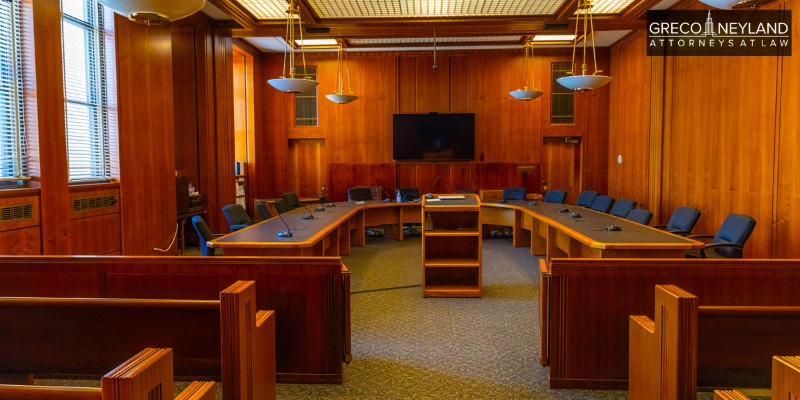
For most people, being stopped by the NYPD can be a nerve-racking experience. But being handed a slip of paper instead of getting taken to central booking can be confusing. If you find yourself having this interaction with the police, you may wonder, “What is a desk appearance ticket in NYC?” and have other frequently asked questions about this procedure.
While it may feel like a simple ticket similar to a traffic citation, a desk appearance ticket (DAT) is a formal arrest. It’s often used in processing lower-level offenses. Still, the consequences of ignoring or mishandling one are as severe as ever. To protect your record and your future, hire a criminal procedure lawyer who can deal with the complexities of New York City’s court system.
Choose a Criminal Procedure Lawyer From Greco Neyland, PC
Enter Greco Neyland, PC. Our team is made up of former prosecutors. We use our experiences working on both sides of the law to conduct thorough, accurate investigations into accusations against our clients. This helps us build a strong defense that achieves fair outcomes for clients, whether that be reduced or dismissed charges.
The Reality of the Desk Appearance Ticket
City data reveal that in 2022, there were 26,663 DAT arraignments for felonies and misdemeanors in New York City. Suburban NYC had 34,025 by comparison. This ticket is a written notice issued by the police after an arrest. It directs you to appear in an NYC Criminal Court at a future date for your arraignment.
Instead of being held in custody for 24 hours to see a judge, you are released from the local precinct. However, this does not mean your case is “minor.” It is a high-stakes legal proceeding that requires professional intervention.
Under New York’s reformed criminal procedure laws, police are generally required to issue a DAT for most misdemeanors and Class E felonies. This is under the assumption that the individual has no outstanding warrants and a verifiable identity.
In 2025, NYC admitted 49 more people to jail than it discharged each month. Considering this, the city continues its goal of reducing the jail population at facilities like Rikers Island by using pretrial release mechanisms, like the DAT.
Step-by-Step: From the Precinct to the Courtroom
Receiving a DAT means the arrest process is split. So, you are arrested and processed at the precinct, but your day in court won’t be until several weeks later. The experience typically goes like this:
- The Arrest: You are taken to the precinct, fingerprinted, and photographed.
- The Issuance: If you qualify, an officer gives you the DAT, which lists the date, time, and specific courthouse, whether it’s 100 Centre Street in Manhattan or 120 Schermerhorn Street in Brooklyn.
- The Wait: During the weeks leading up to your court date, the District Attorney’s office reviews the police report to decide on formal charges.
- The Arraignment: This is your first official appearance before a judge.
Navigating the NYC Borough Courts
While the criminal procedure laws are the same across the state, each NYC borough handles DATs in slightly different ways. For example, Manhattan may have a higher volume of cases that require sessions of “night court.” Brooklyn, however, may utilize alternative sentencing and diversion programs for DAT cases involving first-time offenders.
Meanwhile, the Queens District Attorney’s office handled a record number of arrests and arraignments in 2025. It examined over 2,000,000 discovery files, conducted more than 45,000 arraignments, and ultimately resolved 44,468 cases. Considering its emphasis on processing discovery files quickly, you must have a lawyer who’s ready to review evidence.
The Bronx and Staten Island have specific paths that a skilled lawyer can use to seek a non-criminal resolution. Examples include drug court or mental health court.
FAQs
What Is the Biggest Risk of Missing Your Desk Appearance Ticket Court Date in New York?
The biggest risk of missing your desk appearance ticket court date in New York is that the judge will likely issue a bench warrant for your arrest. This warrant will stay active for an indefinite time period. This means that any future interaction with law enforcement, even a simple traffic stop, will result in you being taken into custody.
What Happens During the Weeks Between Receiving a DAT and My Court Date?
During the weeks between receiving a DAT and your court date, the district attorney’s office should be reviewing the police report and deciding whether to formally file charges. An experienced criminal defense lawyer can use these weeks for early intervention to negotiate against prosecution and potentially get the case closed before your scheduled arraignment.
Does Receiving a DAT Show Up on Employment Background Checks?
Receiving a DAT does not show up on employment background checks. The DAT itself is a form of arrest, not a conviction. Most standard background checks for non-law enforcement jobs will not immediately show the pending charges. The criminal record typically becomes available to the public only after the case is formally filed and docketed at the arraignment. This is why hiring a lawyer early on is a must.
What Is the Most Severe Misdemeanor That Can Be Processed With a DAT?
The most severe misdemeanor that can be processed with a DAT is the Class A Misdemeanor. Although police often use DATs for lower-level offenses, state law requires their use for most misdemeanors, which include Class A. This highest-level misdemeanor carries a maximum penalty of 364 days in jail and a fine of up to $1,000.
Hire a Criminal Procedure Lawyer Today to Protect Your Future
Many New Yorkers make the mistake of showing up to their DAT date alone. They often do this, thinking that the judge will simply dismiss the case because they weren’t held overnight. This is a dangerous misconception.
A DAT still results in a criminal record if not handled correctly. An experienced NYC criminal procedure attorney can often intervene before the court date.
To bring down the risk of a criminal record, avoid a bench warrant, and get a fair outcome, don’t wait. If you received a DAT, contact Greco Neyland, PC, today to speak with an experienced NYC criminal procedure lawyer. We can start with a confidential consultation to determine how to protect your record and future.

-
Midtown (Main Office)
Location: 1140 Avenue of the AmericasSuite 1035 (10th Floor)
New York, NY 10036
Phone: (212) 951-1300
-
White Plains Location:
75 S Broadway, 4th Floor
White Plains, NY 10601Phone: 914-295-9000
-
Long Island Location:
6800 Jericho Tpke.
Suite 108W-1
Syosset, NY 11791 -
24 Hour Service
& Free Consultations
Available
© 2026 Greco Neyland, PC - NYC Criminal Defense Lawyer. All rights reserved
*Images are obtained under license from Canva and other third-party stock image providers, with attribution included where required.
Digital Marketing By 
 ES
ES